
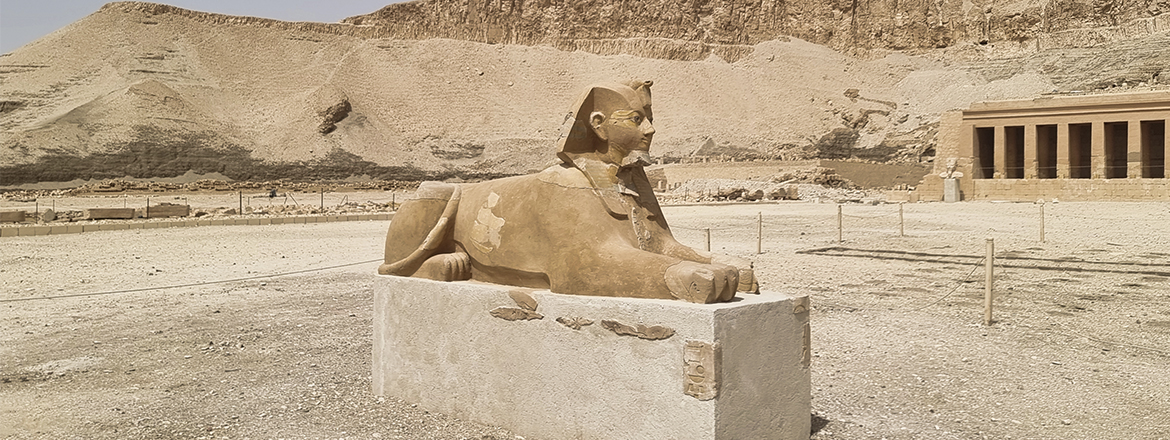
An ancient Egyptian sphinx statue found near Dendera has started new discussion among archaeologists. Some researchers believe the face represents Emperor Claudius, who ruled from A.D. 41–54, while other specialists say available evidence is still not enough. The discovery also included an inscribed tablet and raises new questions about Roman influence in ancient Egypt.
Ancient Egyptian Sphinx Statue Discovery Near Dendera
The statue was uncovered during archaeological work at the Temple of Horus near Dendera in Egypt. The site is located about 33 miles – 54 kilometers – north of Luxor. Researchers found the sphinx inside a basin placed on a limestone platform. According to the excavation team, the basin dates to around 500 years after the reign of Claudius. The reason why the sculpture was placed there remains unknown.
The sphinx has a human face with a little smile and traces of yellow and red colour. These details survived for many centuries and help experts study how the statue originally looked. Archaeologists also found a stone tablet with both hieroglyphic and demotic writing close to the sculpture. The inscription is still being studied and the full meaning has not yet been explained.
Important facts about the discovery:
- The excavation took place at the Temple of Horus near Dendera.
- The location is about 33 miles – 54 kilometers – north of Luxor.
- The basin dates to roughly 500 years after Claudius ruled.
- A tablet with hieroglyphic and demotic text was found nearby.
Emperor Claudius and the Identification Debate
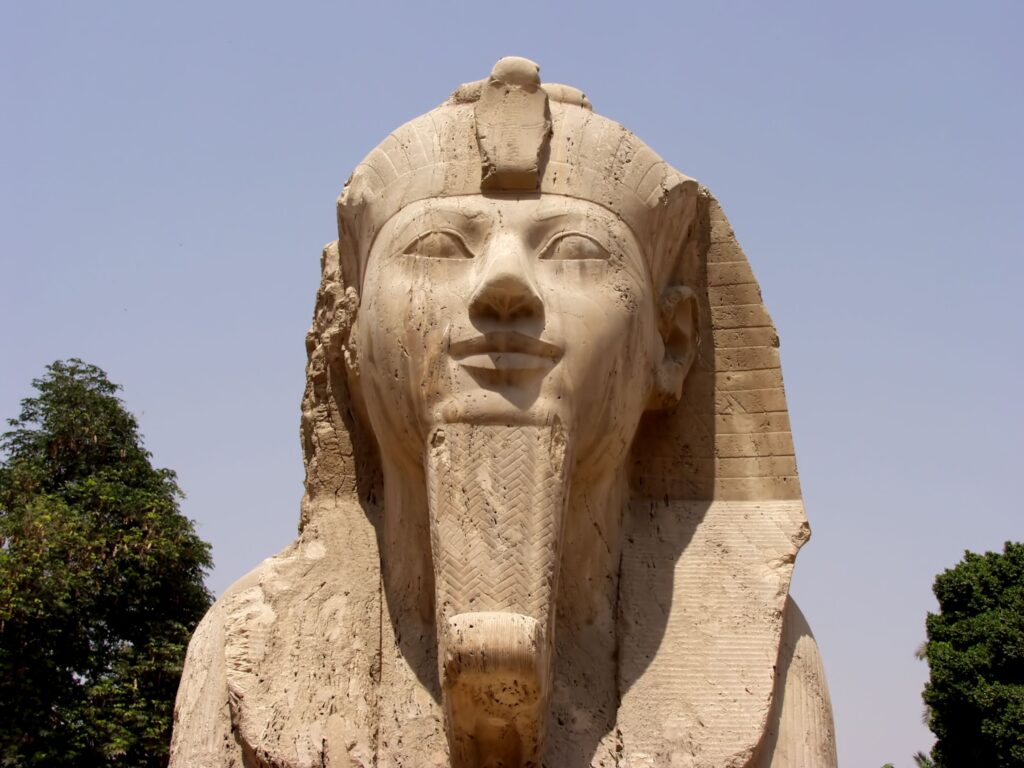
The excavation team compared the face of the sphinx with known portraits of Roman rulers. They suggested that the closest similarity is Emperor Claudius, who ruled the Roman Empire from A.D. 41–54. During this period, Egypt was under Roman control, although Claudius himself never traveled there.
Roman emperors often appeared in local artistic traditions across different provinces. In Egypt, rulers could be represented in forms connected with Egyptian religion and royal traditions. Because of this, a sphinx with imperial features would not be unusual for that historical period.
Why Some Experts Remain Careful
Not every specialist agrees with the first interpretation. Several historians and experts in Roman portrait sculpture explained that photographs alone cannot confirm the identity of the face. Small differences in artistic style, damage to the sculpture, or limited visual details make a final decision difficult.
Scholars say many Roman portraits share similar facial features. Without additional inscriptions or stronger archaeological evidence it is difficult to identify any single emperor. After they finish studying the tablet near the sphinx.
Several reasons explain the different opinions:
- Images currently available show only limited details.
- Roman portraits sometimes have similar facial characteristics.
- The nearby inscription has not yet been fully translated.
- More archaeological analysis is still in progress.
Roman Egypt and Future Research
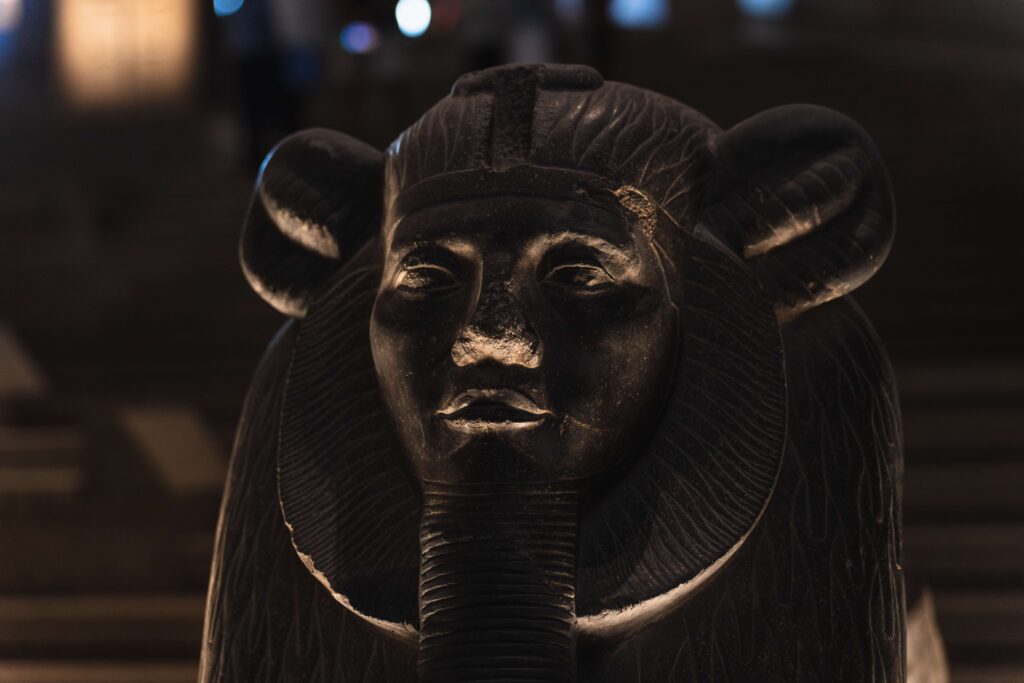
The possible connection between the sphinx and Claudius is not the first example of Roman rulers appearing in Egyptian style. In 2014, archaeologists reported a carving at the Temple of Isis at Shenhur, around 12 miles – 20 kilometers – north of Luxor, showing Claudius presented as a pharaoh. Other discoveries also include sphinxes with features connected to Roman emperors.
While the new statue may be connected to another ruler eventually, the discovery is still useful to understanding the relationship of Roman government and Egyptian religious traditions. Archaeological work at Dendera continues and with each new object, the picture of life under Roman rule can be made clearer by researchers. Future excavations and analysis of the inscription could answer questions about the statue, its purpose and the person it was meant to honor.